Recent elections in Honduras have returned right-wing leadership to power, with immediate implications for the autonomy of Indigenous communities.
- Home
- About Us
- Issues
- Countries
- Rapid Response Network
- Young Adults
- Get Involved
- Calendar
- Donate
- Blog
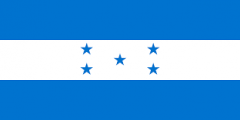 Honduras did not experience civil war in the 1980s, but its geography (bordering El Salvador, Guatemala and Nicaragua) made it a key location for US military operations: training Salvadoran soldiers, a base for Nicaraguan contras, military exercises for US troops. The notorious Honduran death squad Battalion 316 was created, funded and trained by the US. The state-sponsored terror resulted in the forced disappearances and extrajudicial killings of approximately 200 people during the 1980s. Many more were abducted and tortured. The 2009 military coup d’etat spawned a resurgence of state repression against the civilian population that continues today.
 Recent elections in Honduras have returned right-wing leadership to power, with immediate implications for the autonomy of Indigenous communities.
You’ve heard of the “banana republic”? It started with the railroads. In the late 1800s, the Meiggs family (Boston entrepreneurs) began constructing a rail line in Costa Rica. They recruited workers from the US. But they were unprepared for the reality of manual labor in a tropical environment—yellow fever, venomous wildlife, brutal manual work clearing dense jungle with machetes in the heat of monsoon season. When they died in great numbers, the family went to New Orleans and brought 700 inmates to Costa Rica. They promised pardons in exchange for labor. But only 25 survived!
So, bananas? As the railroad was built, along its tracks, something else had been growing. To feed his workforce, the project leader had planted banana trees along the railroad lines. Bananas grew fast, grew abundantly, and had only just been introduced to the American consumer at the Worlds’ Fair in 1876.
When Costa Rica defaulted on loan payments in 1882, the Boston entrprenuer made a deal. He would finish the final forty miles of track with this string attached: 800,000 acres of tax-free land along the railroad and a 99-year lease on the rail route itself. A single man now controlled the land, the transport, and the market.
By the time the railroad was completed in 1890, 5,000 men had died building it. The European market now had access to coffee from Costa Rica. And the banana empire began.
(You can learn about alternative trade organizations that partner with worker-owned banana farms at EqualExchange.coop )
Between 2015 and 2025, Honduras recorded 113 murders of environmental defenders, and nine out of ten cases remain unpunished, according to data from the Association for a More Just Society (ASJ). The departments of Colón, Yoro, and Atlántida account for the majority of these crimes, in territories marked by conflicts over land and natural resources. Meanwhile, environmental organizations and defenders denounce the lack of progress in investigations and the absence of state protection for those who defend the environment.
The Inter-American Court of Human Rights has now ruled in favor of four communities harmed by the government of Honduras and outside investors.
The ancestral homelands of the Garífuna people are the coastal lands of northern Honduras and islands just off the coast. In 2003 they began filing legal complaints with the the Inter-American Commission on Human Rights (based in Washington, DC for their government’s violation of its cultural and territorial rights. Now more than a decade since the first court ruling in their favor, the government of Honduras has failed to implement the court orders. A big stumbling block is that the communities that won their cases in the Inter-American Court (2015: Triunfo de la Cruz and Punta Piedra; 2023: San Juan) are fighting private corporations and foreign investors who have a lot at stake. Some have already illegally usurped lands and built tourist resorts, so it’s tricky to figure out how to return ancestral lands to the Garífuna people and compensate the companies and investors for their losses.
As Garífuna leaders have become more vocal after the 2015 ruling, the persecution against them has increased—surveillance, intimidation, violence, criminalization. Repression is expected to increase following the fourth favorable ruling by the Inter-American Court of Human Rights. On March 4, 2026, the international body “declared the State of Honduras responsible for the violation of the rights to collective property, participation, access to information, cultural identity, food and personal integrity of the Garífuna Community of Cayos Cochinos and its members.”
Cayos Cochinos or Cochinos Cays consist of two small islands and 13 smaller coral cays situated 19 miles northeast of La Ceiba on the Atlantic coast of Honduras. The archipelago of cays is an ancestral home for the Garífuna people, whose subsistence, cultural identity and spiritual relationship are closely linked to the sea and artisanal fishing. Once the state declared the cays a protected environmental area, it authorized tourism and reality TV filming but restricted the Garífuna’s fishing rights. All of this done, of course, without prior, free and informed consultation of the community—in violation of international law.
The killing of Indigenous environmental defender Berta Cáceres on March 2, 2016 was not unique. More than 1,000 people were killed for political reasons during the 12 years of the narco-dictatorship. The people of Honduras know that when communities organize in defense of their territories, they too often face militarization, repression, criminalization, and violence. But Berta’s assassination does remain as one of the most visible symbols of the risks borne by land and environmental defenders. The behind-the-scenes plotting of her brutal assassination is slightly complicated but the reasons very straight forward. The narco-dictatorship that “opened up Honduras for business” tried to kill the organized resistance to their mega-projects (like the privatization of the Gualcarque River for foreign investors' hydro-electric project) that illegally dispossess Indigenous and campesino communities of land, water, and self-determination.
How can we honor Berta?
For one, we can affirm the demand of the Council of Popular and Indigenous Organization of Honduras (COPINH) that the intellectual authors of the assassination be brought to justice. Moreover, we can do what Berta would do. Live, organize, educate, work and struggle together. Reach out and support the too many victims of this violent, unjust and unequal global human order. Name, denounce and hold accountable the responsible actors—countries, companies, wealthy elites, banks, investors and more. Organize, educate, work and struggle against all injustice, inequality and discrimination. Live with the knowledge that another world is indeed necessary and act as though we believe it is indeed possible.
To support IRTF’s accompaniment work with human rights and environmental defenders in Honduras, click here.
This article by Consortium News examines the Zones for Employment and Economic Development (ZEDEs) in Honduras and how tech billionaires like Peter Thiel profit of neocolonialist enclaves, allowed to have their own government, police force, courts, laws and any taxes collected, while indigenous people that have been dependent on that very land are subjected to exploitation, persecution and displacement.
Support a historic shift in U.S. foreign policy. House Resolution 1056 calls for ending the Monroe Doctrine and building a “New Good Neighbor” relationship with Latin America and the Caribbean. Urge your US representative to co-sponsor this landmark resolution acknowledging two centuries of intervention and injustice.
This article by ProPublica examines the special treatment enjoyed by convicted then pardoned Juan Orlando Hernandez, former President of Honduras, who was imprisoned for accepting bribes and allowing traffickers to export more than 400 tons of cocaine to the U.S.
The presidential election in Honduras in November 2025 has evolved into a constitutional crisis, with fraud allegations, recount demands, and clashes between government institutions after the electoral council declared Nasry Asfura the winner. The controversy is also tied to U.S. political and corporate interests, including Trump-linked support and high-stakes “model city” investment projects.
This aricle published in The Guardian gives insight on what consequences the pardoning of convicted drug smuggler and former president of Honduras Juan Orlando Hernandez might have on enviromental defenders in Honduras. Impunity for violent crimes committed against environmental defenders gives a green light to would-be assassins. In February 2025, an environmental defender in the central department of Comayagua, Juan Bautista, and his son were ambushed and killed, with their bodies dismembered and discarded in a canyon. These were just two of at least 155 murders of land and environmental defenders in Honduras documented by Global Witness between 2012 and 2024, the vast majority unresolved.
In response to Trump's pardon of Juan Orlando Hernández, one environmental defender noted: “There is a sense that the brakes are off again. People feel exposed.”
